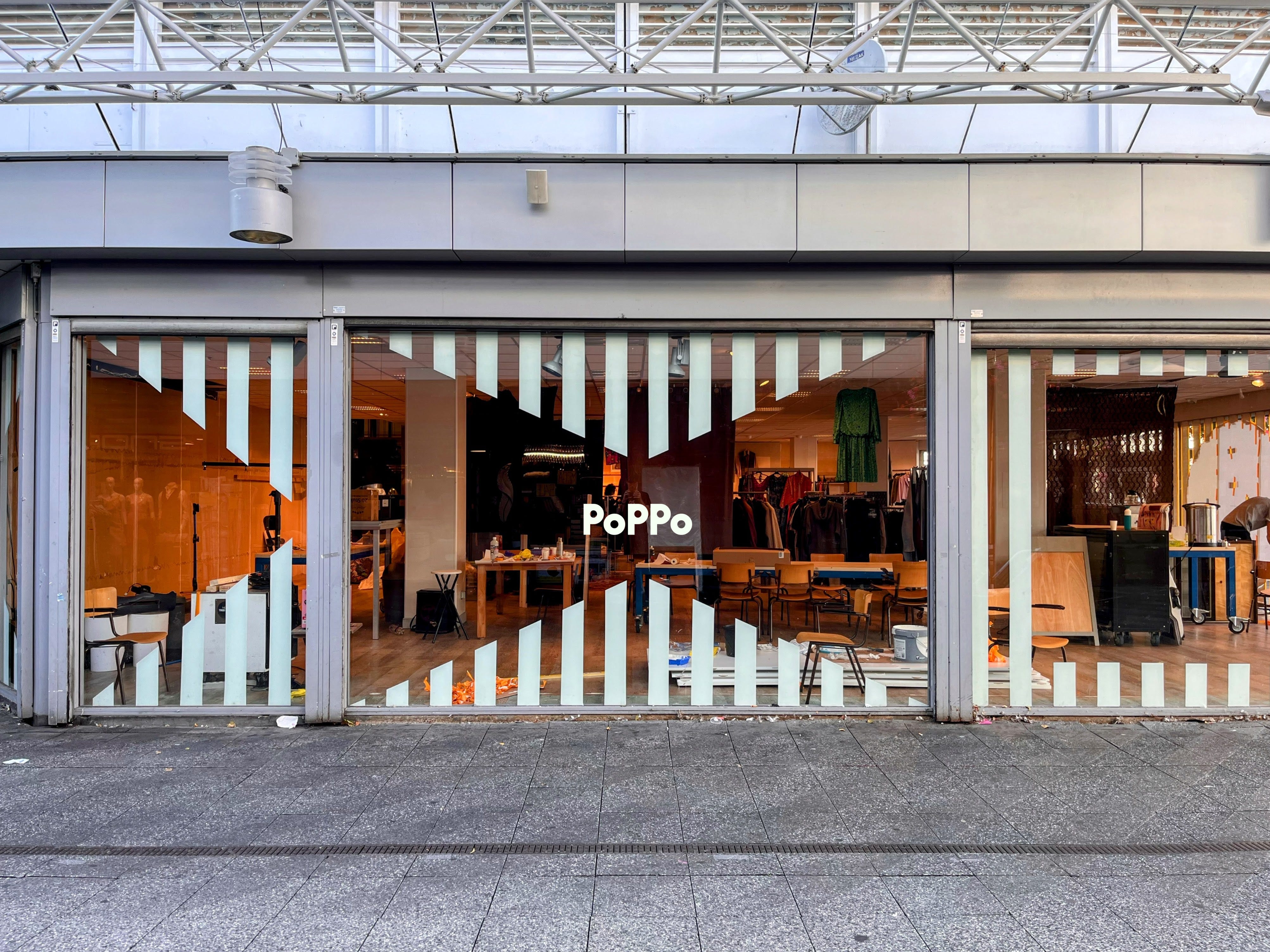
The bankruptcy of the Dutch Blokker household store chain in 2024 was more than just the loss of a place to buy vacuum cleaner bags and drying racks. It was a symbolic end to the era of the Big Box retailer — the generic, one-size-fits-all model that dominated our shopping centres for decades. But in the vacuum left by these retail dinosaurs, something interesting is growing.
This Sunday, PoPPo opens its doors in Amsterdam-Noord. Occupying the 600 m² carcass of a former Blokker store, our first pop-up department store is a live experiment in urban regeneration. It replaces the monolithic retailer with a chaotic, curated mix of hyper-local entrepreneurs, education, and culture.
It’s an example of the micro-space revolution we have been tracking. And it might just be the blueprint for saving our shopping centres. For us, PoPPo is our first actual project dealing with micro-space.
The rise of the micro-mall
We’ve written before about small being the new big, and how rising rents make large commercial spaces a gamble that few can afford. When a giant like Blokker falls, it leaves behind square footage that is too large and too expensive for almost anyone else. The solution? Compartmentalisation.
PoPPo creates a micro-mall within the shell of the old store. By breaking the space down, it allows entry for those who actually bring flavour to a city:
Vintage fashion: curated second-hand collections from POP18 and VUNK.
The service economy: a beauty court featuring The Living Groom and Nail’d By.
Local hospitality: Keuken van de Markt provides a test kitchen for local chefs.
Education as anchor: interestingly, Hogeschool Inholland is moving in to provide on-site education, turning a shop floor into a classroom.
On the same floor, Papaver Amsterdam’s hidden speakeasy offers space for events and workshops.
This aligns perfectly with the trend seen in other global cities, where subdividing commercial space reduces financial risk for landlords and creates a vibrant, resilient ecosystem for tenants.