


Forget Uber, here comes the Banne Hopper
In the northern neighbourhood of De Banne in Amsterdam, a small electric vehicle quietly makes its rounds. Known as the Banne Hopper, this compact shuttle navigates bike paths and pavements, offering rides to locals heading to the hairdresser, the supermarket, the doctor, or even a local card game. Unlike a flashy start-up, this is a grassroots mobility initiative — entirely set up and run by the neighbourhood itself.
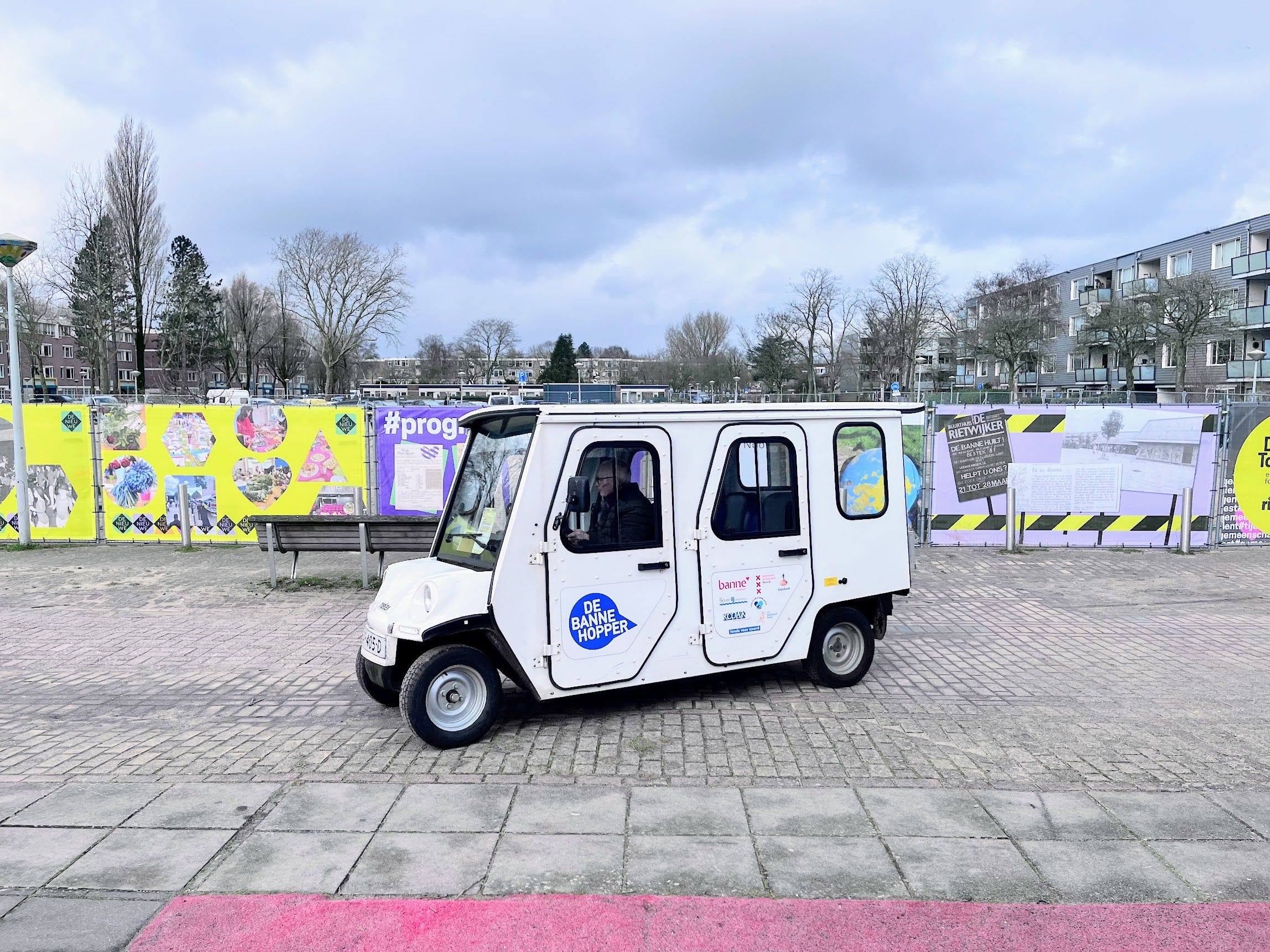
The Banne Hopper is a response to a problem faced by many urban areas: the lack of accessible, fine-grained public transport for those with limited mobility — often older adults or people with disabilities. Since the opening of Amsterdam’s North-South metro line in 2018, many local bus routes have disappeared. For some, this has made even the nearest supermarket or GP difficult to reach. When the last supermarket in De Banne closed, locals took action, launching the Banne Hopper to fill the gap. A round trip costs just €2.50.
Now operating as a foundation, the Banne Hopper is entirely run by volunteers, funded by local housing associations, a nearby hospital, and the City of Amsterdam. From drivers to phone operators and planners, everything is managed by residents.
What are the key ingredients to its success, and what valuable insights can it offer urban planners, designers, and authorities?
