


Rent a few moving trucks, hang art in them, and you have a gallery. That’s what the founders of U-Haul Gallery did in New York: a pop-up in camouflage, parked right in front of your door.
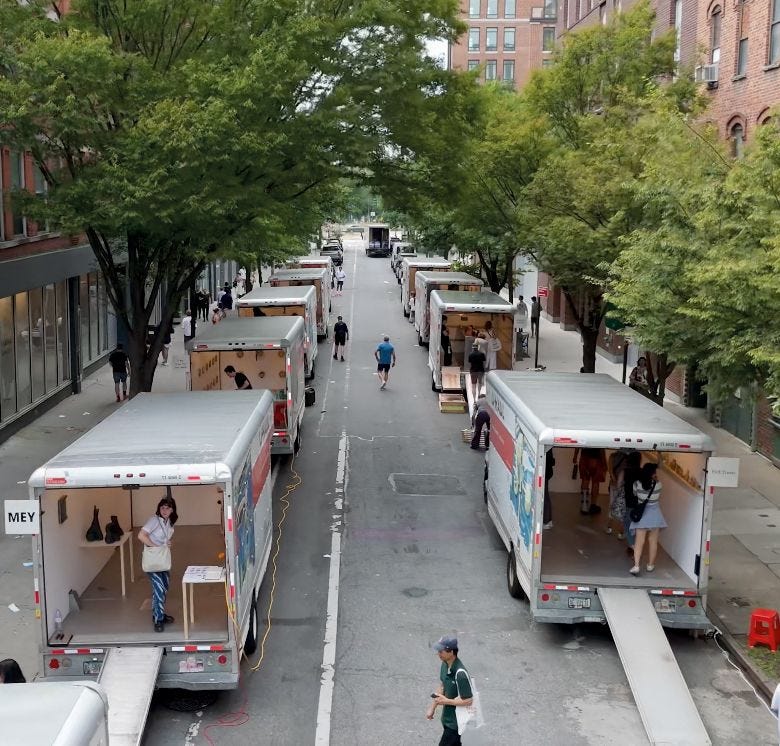
Most galleries are white cubes in upscale neighbourhoods, expensive and hard to get into for emerging makers. At an opening, James Sundquist noticed that the space of such a gallery was not much bigger than the cargo area of a truck. Renting a moving van costs a fraction of the rent, and it can be a gallery just as well.
The New York collective rents standard moving trucks from U-Haul, for $29.99 a day according to the founders, and parks them where the art world already is: outside the Javits Center during the Armory Show, and in front of Gagosian in Chelsea.
In New York’s busy traffic, the camouflage works. Enforcement officers quickly assume someone is moving. Sundquist calls that assumption the U-Haul effect: traffic officers often leave the truck alone and ticket the cars next to it. A parking ticket is priced in. The founders frame the tickets that do arrive and sell them as artworks. The rent for this spot is the chance of a ticket.
It’s the same tactic we described as normcore gentrification: plain on purpose, minimal investment, and low effort that reads as authentic. A moving truck is the extreme version, with no shop, hardly any fit-out and no lease.
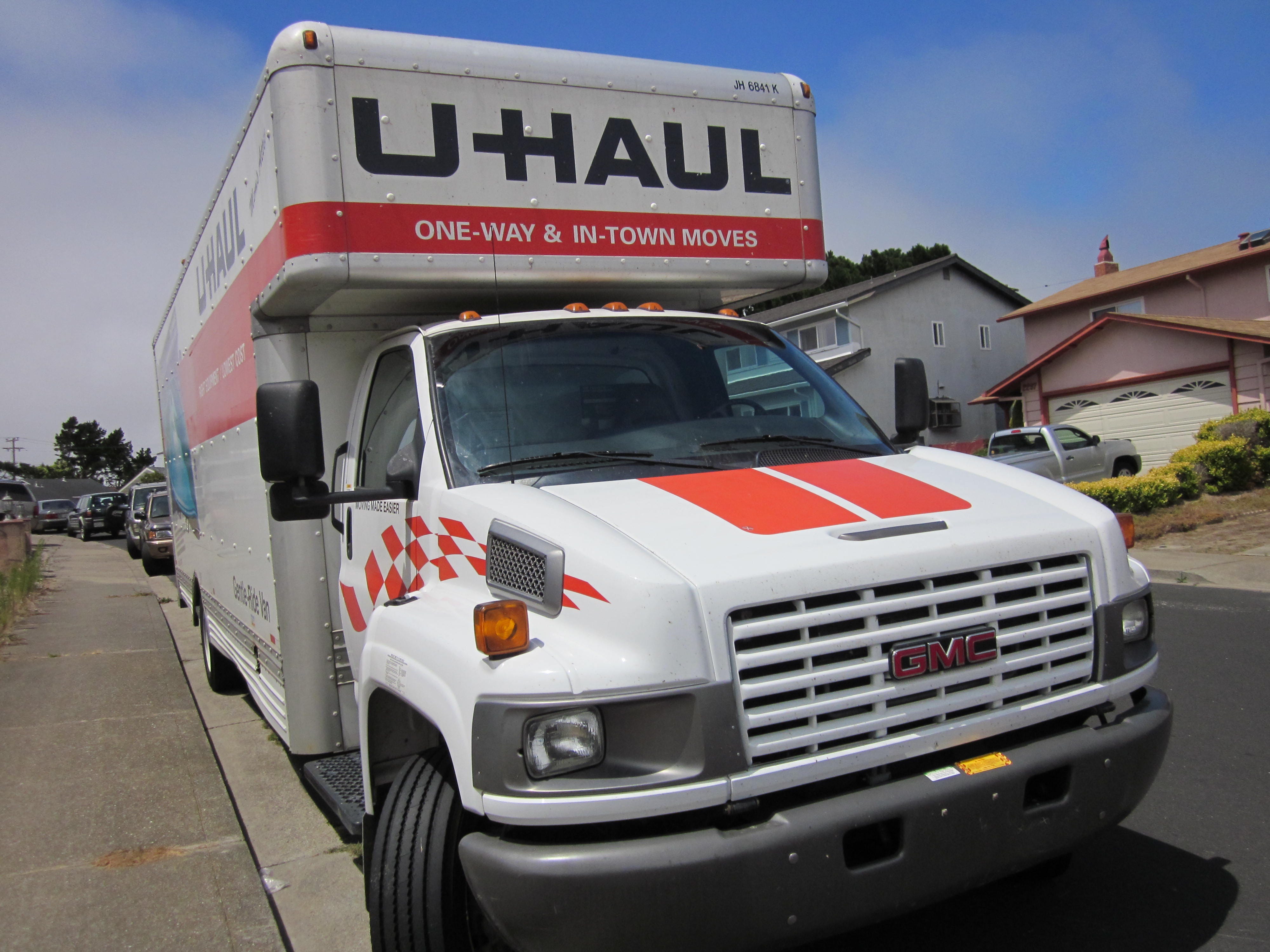

The U-Haul Gallery collective piggybacks on the U-Haul brand. The company does not sponsor the gallery and, according to the founders, has not criticised it.
Nothing about the format is specific to art. A truck rented by the day is a shopfront for anything that fits behind a rolling door: a plant shop, a lunch counter, a pop-up for whatever sells this week.
Bye bye!