


First things first
🌌 Will the urban sky soon be filled with ads? Last week’s newsletter explored the sky as a source for new products, from ink to ceramics. But in China, they’re proving that it also makes a powerful marketing channel. The country has long been ahead of the curve with spectacular drone shows and aerial fireworks, and now they’re discovering that the same technology can be used for floating advertisements. Love them or hate them, these ‘floating pixels’ open up a world of possibilities.
🐶 Pet-friendly public spaces are set to take off, the emerging post-work era is reshaping where and how we spend our time, and pop-up healthcare is ensuring rural communities still have access to doctors (more on that last trend in next week’s premium newsletter). These and other key insights feature in the 2025 Trend Report for Planners by the American Planning Association and the Lincoln Institute of Land Policy. Read the full report here.
🇲🇽 Walking on Mexican pavements can be quite an adventure. One moment you're stepping over uneven surfaces, the next you're navigating a sudden slope or dodging a low-hanging sign. It’s all part of the Mexican Sidewalk Challenge.
New concepts for parking spaces
Imagine paying for a parking space, but instead of leaving your car, you set up a swimming pool, an outdoor cinema, or a mini-park. Is that actually allowed? And if so, why? If not, why not?
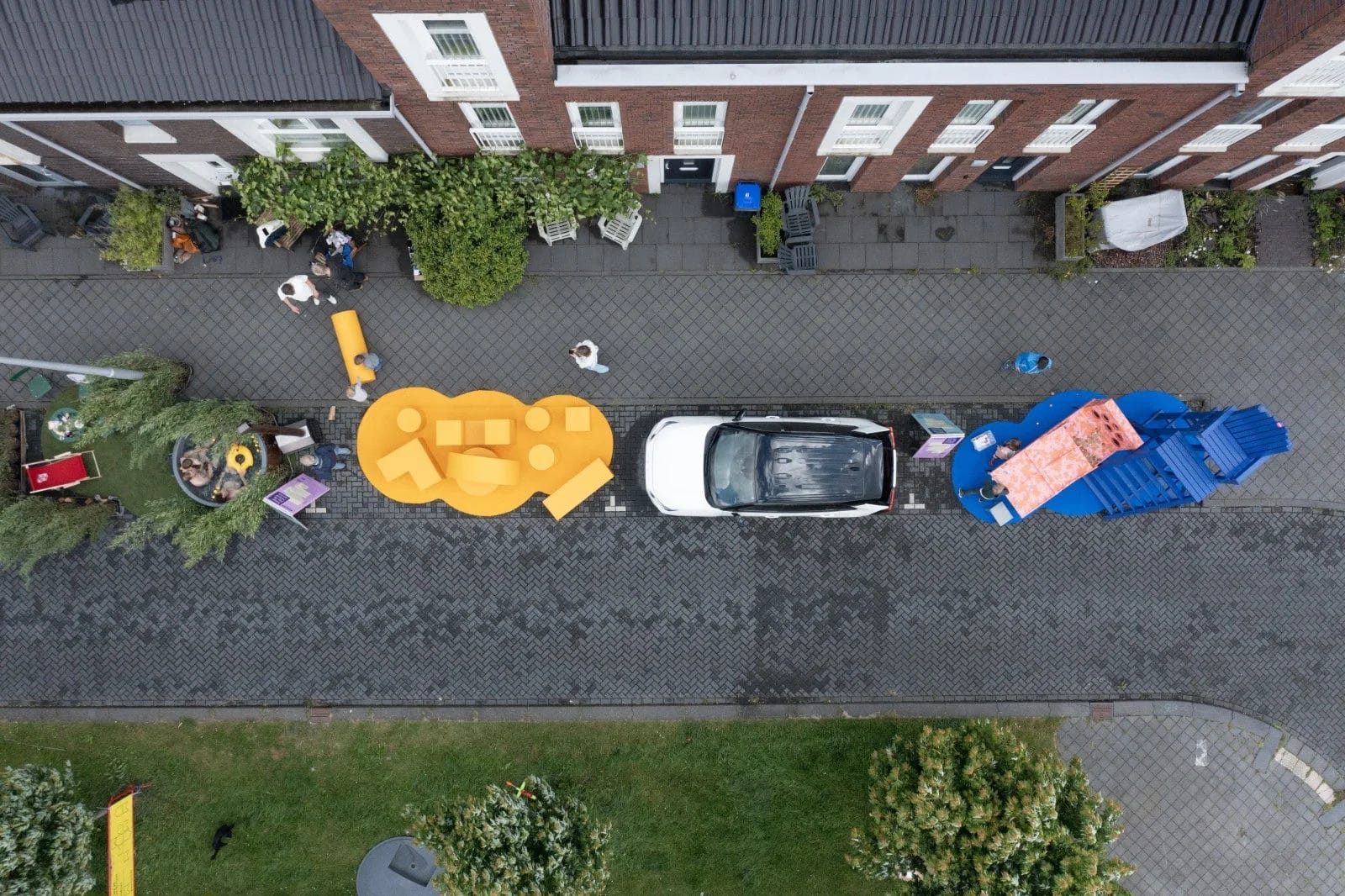
Last year, we collaborated on RAUM’s Dutch podcast series Algorithm of the City, exploring how creative laws and regulations can shape better cities. In Episode 3, hosted by our very own Jeroen, we examined the use of parking spaces — an idea that led RAUM to launch a real-life experiment on the streets of Utrecht: the Pop-Up Parking Service.


The concept is as simple as it is innovative: city residents can order a parklet, which is delivered to a parking space outside their home and later collected again. Options range from a sauna or a playground to a coffee bar or an outdoor cinema — all complete with a number plate and a valid parking ticket.
The Pop-Up Parking Service playfully explores the limits of urban regulations, sparks debate about the dominance of cars in public space, and encourages people to reimagine their own streets.